
In a bustling city like Bangalore, birds like pigeons, crows, and sparrows often become uninvited guests—building nests, littering spaces, and creating an unhygienic environment. Whether it’s your balcony, AC unit, or a large open area, installing bird protection nets has become essential. But here’s a question many people ask: Is bird netting the same for all spaces? The answer is—no.
This blog takes you deep into the world of bird net installation for various spaces—balconies, air conditioning units, and open areas. We’ll help you understand why they differ, what materials are best suited, installation techniques, cost considerations, and much more.
1. Introduction to Bird Netting
Bird netting is a safe, humane, and effective way to block birds from entering or nesting in unwanted areas. These nets are made from UV-stabilized polyethylene or nylon and are nearly invisible from a distance, ensuring safety without disturbing aesthetics.
It’s not just about stopping birds—it’s about hygiene, safety, and peace of mind.
2. Why Bird Nets Are a Must in Bangalore
Bangalore’s weather and high-rise architecture attract a variety of urban birds—particularly pigeons. Over time, bird droppings, feathers, and nests can:
- Damage property surfaces
- Block drainage systems
- Invite bacteria and diseases
- Leave stubborn stains and foul smells
Areas like Koramangala, Whitefield, Indiranagar, and JP Nagar face frequent pigeon-related issues. The easiest and most eco-friendly way to stop this? Bird netting.
3. Types of Bird Problems in Residential and Commercial Spaces
Before we dive into installations, let’s explore the spaces where bird infestations are common:
- Balconies: Pigeons love the corners and ledges.
- Air Conditioner Outdoor Units: Perfect nesting zone for warmth and cover.
- Terraces and Open Courtyards: Vast spaces often targeted by flocks.
- Parking Lots & Ventilation Shafts: Droppings from overhead pipes and ceilings.
- Industrial Warehouses: Birds nest in rafters, affecting hygiene and goods.
Each of these spaces requires customized netting solutions.
4. Understanding the Difference: Balcony vs AC Units vs Open Spaces
Every space differs in shape, exposure, accessibility, and purpose. So, a one-size-fits-all net won’t work.
| Area | Purpose of Net | Challenges | Material Needs |
|---|---|---|---|
| Balcony | Prevent nesting, ensure safety | Wind, aesthetics | UV-protected, transparent nets |
| AC Units | Block nesting, allow air flow | Tight space, maintenance | Small mesh size, flexible fitting |
| Open Spaces | Control bird access, safety | Large area, strong wind | Heavy-duty, weatherproof netting |
Let’s explore them one by one.
5. Bird Net Installation for Balconies: The Homeowner’s Primary Concern
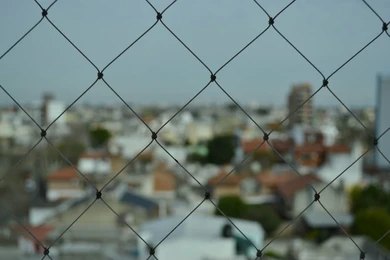
Balconies are perhaps the most common and critical areas for bird netting in residential Bangalore. They are often used for relaxation, drying clothes, or simply enjoying the view. When pigeons take over, these spaces become unusable.
Unique Challenges & Considerations:
- Aesthetics: Balconies are an extension of the living space. Homeowners often prioritize an aesthetically pleasing solution that doesn’t drastically alter the view or the building’s facade. Transparent monofilament nets are highly favored here.
- Child and Pet Safety: While the primary goal is bird control, a good balcony net often doubles as a safety net for children and pets, preventing accidental falls. This necessitates a strong, taut installation with no gaps.
- Ventilation and Light: The net should not significantly impede airflow or natural light, ensuring the balcony remains a pleasant space.
- Access for Maintenance: While keeping birds out, residents still need access to the balcony railing for cleaning, maintaining plants, or retrieving fallen items.
- Building Regulations: Some apartment complexes in Bangalore might have specific guidelines regarding external modifications, including the color or type of netting allowed.
Installation Methodology Differences:
- Anchoring Points: Balcony nets typically involve securing the net to existing railings, walls, and the ceiling. This often requires:
- High-quality hooks and fasteners: Stainless steel or galvanized hooks drilled into the concrete or masonry are common.
- Support wires/cables: Stainless steel or nylon wires are often run along the perimeter to provide a strong framework for attaching the net, ensuring tautness and preventing sagging.
- Clamping systems: For glass railings or structures where drilling is not feasible, specialized clamps might be used.
- Tensioning: Achieving the right tension is crucial. A well-installed balcony net should be taut like a drum, preventing birds from pushing through or getting entangled. This often involves a systematic lacing and tightening process.
- Corner Solutions: Corners are critical points where gaps can occur. Professional installers pay close attention to seamlessly joining net sections at corners to eliminate entry points.
- Door/Window Access: If the balcony has sliding doors or windows that need to be opened, the net needs to be designed to allow this without compromising its integrity. This might involve zippered sections or carefully placed openings.
- Visibility: Installers often choose transparent or light-colored nets and ensure the installation is as discreet as possible to maintain the view.
What’s Different? The emphasis on aesthetics, child/pet safety integration, and the need for seamless, almost invisible installation that complements residential living. The focus is on creating an impenetrable, yet visually unintrusive barrier for frequent human use.
6. Bird Net Installation for AC Units: Protecting Vital Equipment
AC outdoor units are notorious bird magnets. Their warm motors, sheltered spots, and elevated positions offer ideal nesting sites. This can lead to severe consequences for your cooling system.
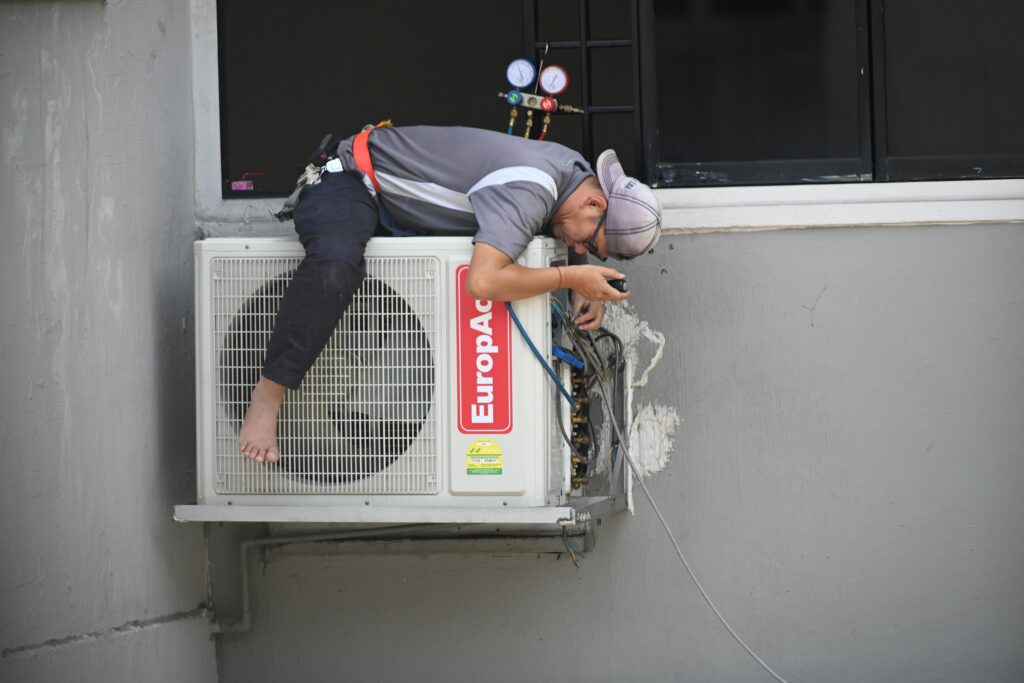
Unique Challenges & Considerations:
- Critical Equipment Protection: The primary goal is to protect the expensive and vital AC unit from damage caused by nests, droppings, and bird activity.
- Airflow: The net absolutely must not impede airflow to the condenser coils. Restricted airflow leads to overheating, reduced efficiency, increased electricity bills, and premature breakdown of the unit. This is the single most important factor.
- Access for Servicing: AC units require periodic servicing. The netting solution must allow easy and safe access for technicians without requiring the complete removal and reinstallation of the net every time.
- Confined Spaces: AC units are often located in tight niches, small ledges, or dedicated enclosures, making installation challenging.
- Heat Resistance: The net and its fasteners must be able to withstand the heat generated by the AC unit.
- Rodent Protection (Secondary): While primarily for birds, a well-installed AC unit net can also deter rodents from nesting in or damaging wiring.
Installation Methodology Differences:
- Custom Cages/Enclosures: Instead of simply stretching a net over the unit, AC unit installations often involve creating a custom net cage or enclosure around the unit. This typically involves:
- Metal or PVC frame: A lightweight but sturdy frame (often aluminum, galvanized steel, or high-grade PVC pipes) is constructed around the AC unit.
- Netting over the frame: The bird net is then stretched tautly over this frame and securely fastened.
- Ventilation Gaps: Crucially, the design must incorporate ample space between the net and the AC unit’s vents to ensure unimpeded airflow. This means the net isn’t directly on the unit but creating a protective “bubble” around it.
- Access Panels/Doors: The frame or net design will include a hinged door, a zippered opening, or easily detachable sections secured with carabiners or clips to allow technicians to access the unit for cleaning and maintenance without cutting the net.
- Secure Mounting: The frame itself needs to be securely mounted to the wall or floor to prevent dislodgement.
- Mesh Size: A mesh size that effectively deters pigeons (25mm) is usually sufficient, as very small birds are less likely to pose a significant threat to the mechanical components.
What’s Different? The absolute priority on unimpeded airflow and easy access for maintenance. The installation shifts from a simple barrier to a carefully engineered protective enclosure that safeguards critical machinery. Aesthetics are secondary to functionality here.
7. Bird Net Installation for Open Spaces: Large-Scale Protection
“Open spaces” can encompass a wide variety of areas, from building courtyards, overhead shafts, lightwells, and car parking areas to warehouse ceilings, industrial overhangs, and even large architectural voids. These areas often present the most complex and large-scale bird netting challenges.
Unique Challenges & Considerations:
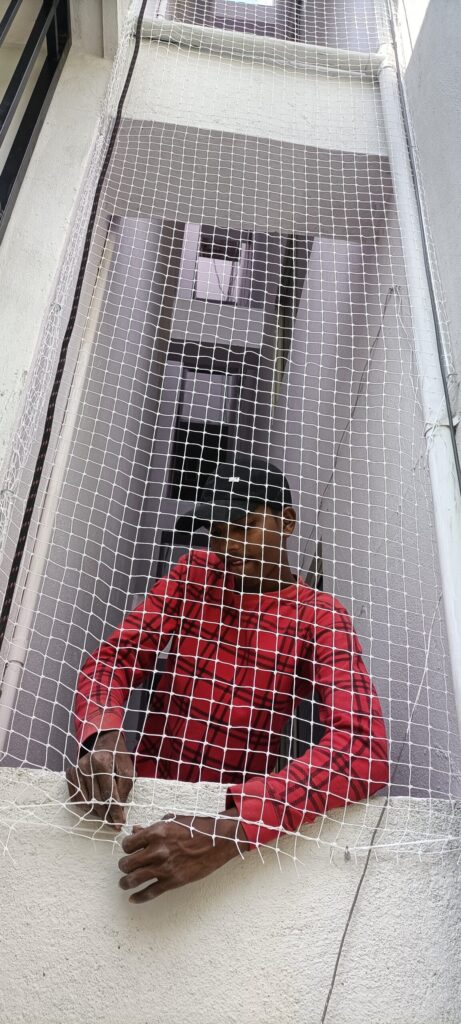
- Scale and Span: These are typically large areas, requiring significant amounts of netting and robust support structures. Spans can be tens or even hundreds of feet.
- Structural Integration: The netting system must be securely integrated into the existing building structure without causing damage or compromising integrity. This often involves working with architects and structural engineers.
- Wind Loading: Large nets are subject to significant wind forces. The support system must be engineered to withstand these loads, especially in open, exposed areas.
- Drainage: If the net covers an area where rain collects, proper drainage must be considered to prevent water pooling on the net.
- Aesthetics (for public spaces): In public courtyards or building entrances, the aesthetic impact is still important, though perhaps less critical than on a private residential balcony.
- Access for Maintenance/Lighting: If lighting fixtures or other equipment are located above the net, access for maintenance needs to be incorporated.
- Bird Type: The type of bird (e.g., pigeons, crows, starlings) will influence the mesh size and overall strength requirements.
Installation Methodology Differences:
- Cable Frameworks: Instead of individual hooks, large open spaces almost always require a robust grid of stainless steel cables (often 2mm to 3mm thick, or even thicker) crisscrossing the entire area. These cables are anchored to load-bearing points on the surrounding structure.
- Perimeter Attachment: Heavy-duty anchor points (eye bolts, wall anchors) are installed around the entire perimeter of the open space.
- Tensioning Systems: Turnbuckles or tensioners are used on the cables to achieve extreme tautness, creating a stable, sag-free platform for the net.
- Net Attachment to Cables: The net is then meticulously attached to this cable grid using specialized rings, clips, or lacing techniques, ensuring uniform tension across the entire span.
- Seaming and Joining: For very large areas, multiple net sections might need to be seamlessly joined on-site using specialized tools and techniques to ensure no gaps.
- Access Hatches/Zippered Sections: For areas that require occasional human access (e.g., for maintenance of lighting or pipes above the net), strategic access hatches or large zippered sections can be incorporated.
- Heavy-Duty Materials: HDPE nets are often preferred for their superior strength and UV resistance in these demanding environments.
8. Key Differences Summarized
| Feature | Balcony | AC Unit | Open Spaces |
|---|---|---|---|
| Size | Medium | Small | Large |
| Accessibility | Easy to medium | Difficult | Varies (height involved) |
| Material Type | Transparent, thin | Flexible, small mesh | Heavy-duty, weatherproof |
| Custom Fitting Needed | Yes | High | Very high |
| Cost (per sq. ft.) | ₹8–₹20 | ₹10–₹25 | ₹12–₹30 |
9. Cost Comparison: Balcony vs AC vs Open Space
| Space Type | Area (Avg.) | Price per Sq. Ft. | Estimated Total |
|---|---|---|---|
| Balcony (100 sq. ft.) | ₹8–₹20 | ₹800–₹2,000 | |
| AC Unit (15 sq. ft.) | ₹10–₹25 | ₹150–₹375 | |
| Terrace (300 sq. ft.) | ₹12–₹30 | ₹3,600–₹9,000 |
Note: Prices may vary based on brand, floor height, urgency, and installer reputation.
10. Material Recommendations
Here are the best net types for each use case:
- Balconies: Nylon net, 1mm thickness, 1.25” mesh
- AC Units: HDPE net, 0.8–1mm, 1” mesh
- Open Spaces: UV-stabilized polyethylene, 1.5–2mm, 1.5” mesh
Always check for:
- ISI or ISO certification
- UV resistance
- Fire-retardant property
- Long-term warranty (at least 3–5 years)
11. Installation Techniques: Custom Approach for Each Area
- Balconies: Ladder-based or rope-access fitting, may require drill work
- AC Units: Requires working on external walls; safety harness essential
- Open Spaces: Often requires scaffolding or high-rise installation tools
Professional installers evaluate the structure and plan accordingly.
12. Common Challenges and Solutions
| Problem | Solution |
|---|---|
| Bird returns after netting | Check for gaps; seal with zip-lock strips |
| AC airflow blocked | Use breathable net material |
| Nets becoming dirty | Clean with water spray every 2–3 months |
| Strong winds loosening nets | Use proper anchoring and SS wire |
13. Maintenance Tips for Each Type
- Balconies: Wipe down once a month with cloth or spray
- AC Units: Clean with soft brush to avoid dust accumulation
- Open Spaces: Inspect regularly for tear or sagging; tighten hooks
Maintenance increases life expectancy of nets by up to 7 years.
14. Why You Need Professionals for the Job
DIY bird netting may seem cheap, but risks include:
- Improper installation
- Safety hazards at heights
- Damage to structure or AC units
- No warranty or support
Professionals provide:
- Clean and safe work
- Strong and durable finish
- Custom design for different spaces
- Time-saving installation
15. Why RS Balcony Safety Nets Is Your Best Choice

RS Balcony Safety Nets is one of Bangalore’s trusted names in bird netting, known for quality, affordability, and customer-first service.
Our Services Include:
- Balcony bird net installation
- AC outdoor unit netting
- Large open space bird control
- Anti-pigeon, anti-monkey nets
- Transparent nets that don’t affect the look of your home
Why Customers Love Us:
- Free site inspection
- Affordable pricing
- UV & fire-resistant materials
- 5-year product warranty
- Same-day installation in most cases
16. Final Thoughts
While bird problems are universal, the solution isn’t the same for all areas. Balcony, AC unit, and open space bird netting each demand different strategies, materials, and installation methods. Investing in the right net for the right space ensures longer durability, better hygiene, and peace of mind.
So whether you’re dealing with pigeons pooping on your balcony, nests in your AC unit, or a bird invasion on your terrace, now you know what makes each case unique—and how to tackle it smartly.
Ready to protect your space from birds?
Call RS Balcony Safety Nets for a free inspection and quote today.
Let’s keep your space safe, clean, and bird-free—professionally and affordably.