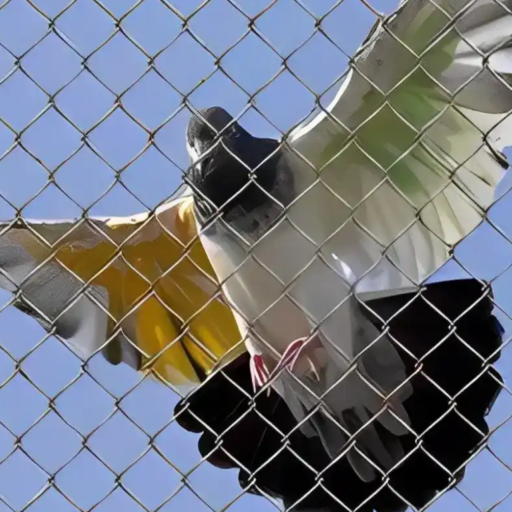
Everybody likes to watch birds fly by their windows, balconies, or gardens. However, it may become a major nuisance when birds begin to build nests on our balconies, leave droppings, or harm plants and property. Bird nets are a quick, easy, and compassionate way to keep birds out of specific parts of your house without causing them any harm.
Installing bird netting is more complicated than simply tying up a mesh, though. If done incorrectly, it may not accomplish its goal or, worse, endanger the same birds you are attempting to repel. To help you do it correctly the first time, we’ll go over the dos and don’ts of installing bird nets at home in this piece.
Let’s get started!
Why Do We Need Bird Nets and What Are They?
Bird nets are lightweight nets composed of nylon, polyethylene, or a comparable material that are intended to serve as a barrier to keep birds out of certain places where they might nest. To prevent birds from causing harm, people place bird netting on balconies, terraces, windows, gardens, rooftops, and even over fruit trees.
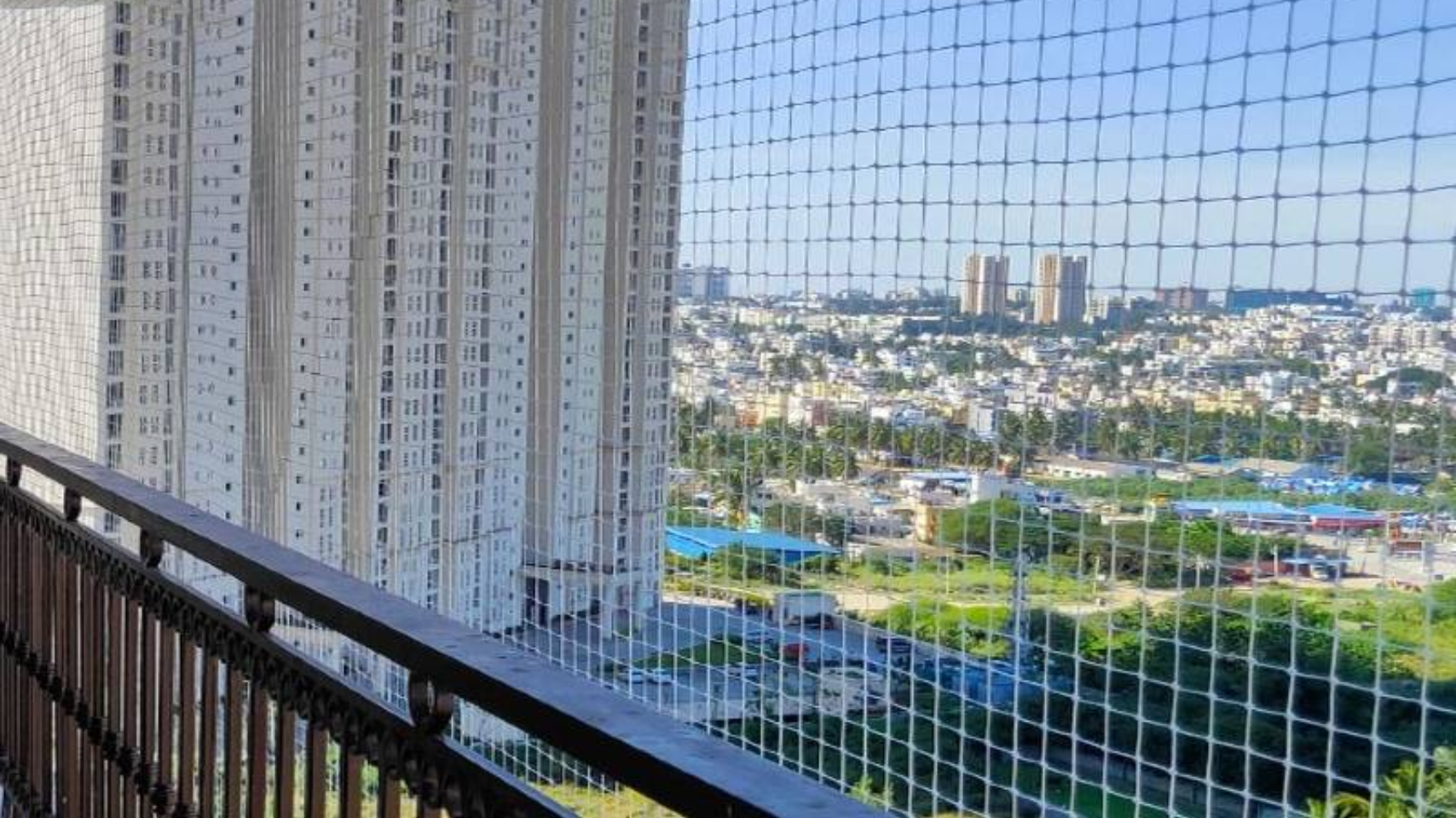
- Many homeowners install bird nets for the following reasons:
- to prevent bird droppings from getting on windows and balconies.
- to stop birds from building their nests in vents or air conditioners.
- to keep birds away from vegetable patches, fruits, or plants.
- to minimize cleaning efforts and preserve hygiene.
Even if these nets are helpful, it’s crucial to install them sensibly and with caution.Let’s examine the proper and improper ways to install bird nets at home.
✅ Dos of Installing Bird Nets at Home
1.Choose the Right Material
Not every bird net is made equally. Select premium, weather-resistant, UV-stabilized materials. Low-quality nets are prone to tearing, brittleness in the sun, and rapid sagging. A sturdy net offers superior protection and lasts longer.
2.Choose the Appropriate Mesh Size
Mesh size is important! If it’s too big, tiny birds like pigeons or sparrows might still be able to get through. If it’s too small, it could obstruct sunlight or airflow. Pigeons do well in most homes with a 1.5 to 2 cm screen, although smaller birds could require a finer mesh.
3. Hire a Professional Installer (if needed)
It makes sense to engage a professional if you have a wide space, such as a patio, balcony, or tall building. They have the equipment, know-how, and safety gear needed to complete the task safely and effectively. Make sure you have the necessary equipment and are confident while doing little do-it-yourself tasks.
4.Take Careful Measurements of the Area
Measure the space where you want to install the net before purchasing it, and make sure your measurements are accurate! This helps you purchase the appropriate amount and size, preventing shortages or waste.
5.Use Proper Fasteners and Supports
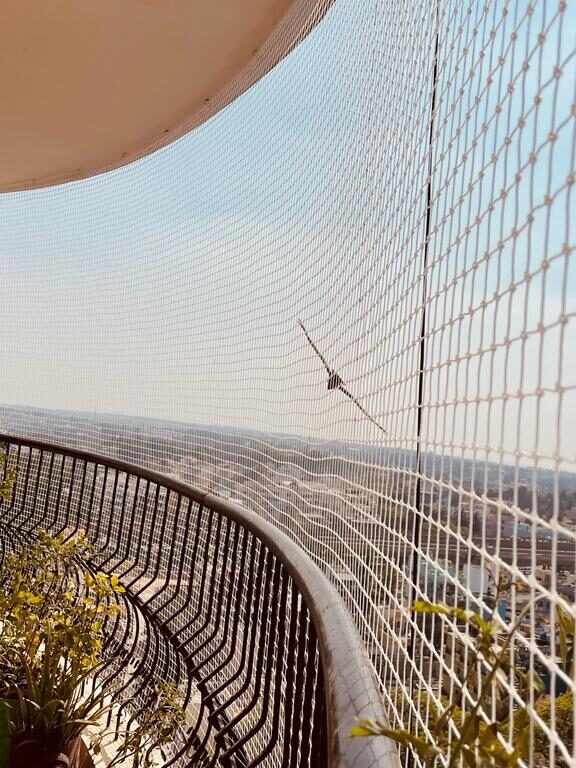
Nets must be firmly anchored. Employ sturdy, weatherproof hooks, screws, nylon ropes, or clips. The net may sag or collapse as a result of weak fasteners coming loose in the wind or rain.
6.Ascertain that the net is taut and neat.
A sagging net is unattractive and useless. When installing, make sure there are no folds or loose pockets by pulling the net tight. This stops birds from scuttling under the net or becoming entangled.
7.Permit Cleaning and Maintenance Access
Install the net so that you can quickly remove or open it when necessary, such as to do maintenance, clean the balcony, or wipe windows. Detachable hooks or zip systems may be useful.
8.Verify the local laws and ordinances
Bird netting may be subject to rules or regulations in some locations, particularly if you reside in a community housing complex or a heritage property. Before installation, check with your local government or housing society.
9.Act Humanely
Keep in mind that the net’s goal is to discourage birds, not to hurt them. Ensure that no birds are injured or trapped by the installation. To make sure no animals are stranded or in pain, check the net frequently.
10.Continue to Make Regular Checks
Bird netting should be periodically inspected for trash accumulation, sagging, and breakage. Every few months, check on them to make sure they are still performing their duties efficiently.
❌Don’ts of Installing Bird Nets at Home
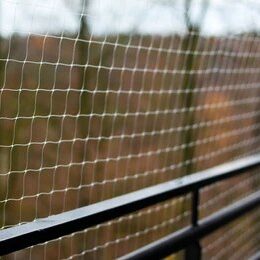
1.Don’t Use Poor-Quality or Cheap Nets
Cheaper nets could seem like a better option, but they frequently break easily, lose their shape, or become brittle in the sun. Over time, you could have to pay more for replacements. Purchase high-quality nets right away.
2.Avoid Blocking Sunlight or Vital Airflow
When covering windows, vents, or balconies, exercise caution. Nets shouldn’t obstruct natural light or ventilation. Your house may feel stuffy and uncomfortable if you have a net that prevents airflow.
3.Don’t Install Without a Strategy
Throwing up a net at random won’t do much. Before you begin the installation, make a plan for the net’s anchoring, the supplies you’ll need, and the locations of the access points.
4.Pay Attention to the Aesthetic Impact
Your home’s appearance can be ruined by a badly fitted net. Make use of nets that complement your home’s color scheme (many nets are available in translucent, white, or black hues) and install them properly.
5.Don’t Install When Birds or Nests Are Already Present
Never install nets when birds are actively nesting or when baby birds are present. Wait until they leave naturally. Removing or disturbing nests can be cruel and may even be illegal in some regions.
6.For do-it-yourself projects, never install without safety gear.
Always wear the proper safety equipment, such as gloves, a helmet, and non-slip shoes, and ideally have someone help you if you’re performing the installation yourself, especially on a balcony or rooftop.
7.Keep Cleaning in Mind
Over time, leaves or bird droppings may gather on nets. An unclean net may sag and possibly draw pests. Include it in your daily cleaning regimen.
8.Remember to Tell Your Neighbors
Before installation, let your neighbors know if you live in an apartment complex or other shared area. It’s courteous to inform everyone in case the netting affects communal balconies or common areas.
9.Never assume that a single installation is sufficient.
Even a well-executed installation requires periodic maintenance. Effectiveness may be diminished by weather, normal wear and tear, or unintentional damage. Be sure to routinely inspect and maintain the nets.
Add visual deterrents to the mix: For extra impact, pair nets with wind chimes, plastic owls, or reflective tapes.
Tips for Making Bird Netting More Effective
- Keep the environment tidy: If you want to keep pigeons away from your property, don’t leave food scraps or trash lying around.
- Cleaning and seasonal changes are made considerably easier by using hooks or zip ties for effortless removal.
- Teach tenants or family members how to use, maintain, and, if necessary, temporarily remove the net.
Common Errors to Steer Clear of
Many homeowners install bird nets incorrectly, even when they mean well. What not to do is as follows:
- purchasing netting without doing an area measurement.
- disregarding the kind of birds that are the issue.
- assuming that every net is the same.
- neglecting long-term upkeep.
- ignoring the effects on bats and squirrels, among other species.
The Environmental and Ethical Viewpoint
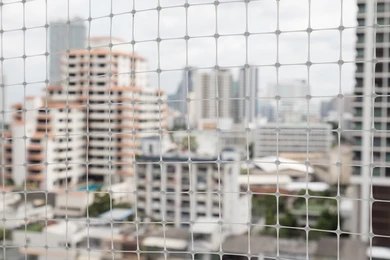
It is important to keep in mind that birds are a component of our ecology. Protecting your house and garden is acceptable, but we should try to do it in a way that honors the environment. Unlike dangerous traps or poisons, bird nets provide a non-lethal solution. To prevent a humanitarian solution from becoming dangerous, installation must be done properly.
If you have a strong interest in wildlife, you may also want to think about:
- placing bird feeders away from balconies in a specific location.
- In your garden or trees, place nesting boxes.
- assisting regional conservation initiatives.
Concluding remarks
Installing bird nets at home can help with a variety of common issues, such as preserving your plants and maintaining a clean balcony. But it’s important to do it correctly. You can make sure that your bird netting is safe, compassionate, and effective for both you and the birds by adhering to the above dos and don’ts.
- Save time and money.
- Reduce stress and mess.
- Protect birds without causing them harm.
- Maintain the beauty and comfort of your living space.
Without endangering the local wildlife, a well-designed and maintained net can help you live in a more pleasant and clean house. Additionally, keep in mind that good habits supported by good intentions make all the difference!